Originally built in 1949, this cedar-shake home in Alamitos Heights, Long Beach includes a two-story main residence, a detached garage, and a backyard pool.
The project remodels the rear of the house while preserving the front elevation, transforming the interior into a light-filled family home. The ground floor is reconfigured into an open kitchen, dining, and living space that connects directly to the backyard pool, and the second floor is reorganized to accommodate an additional bedroom.
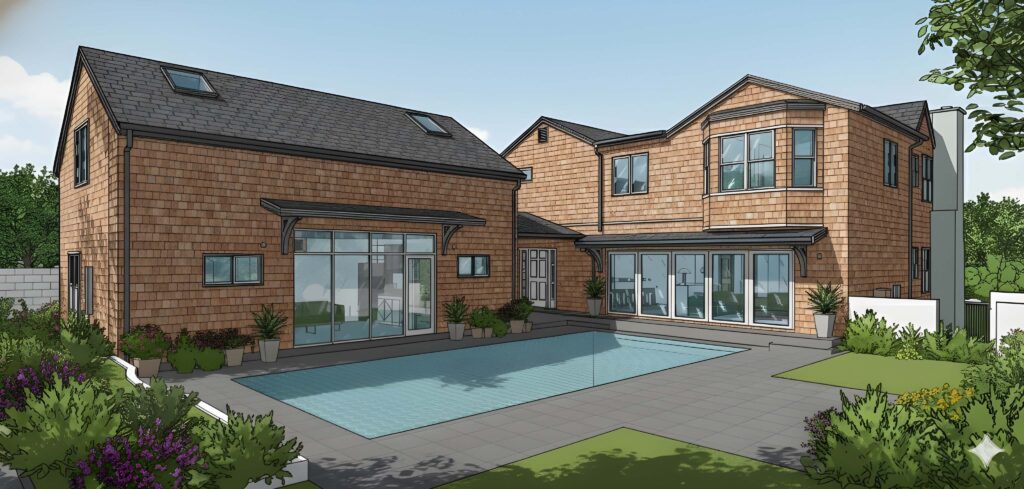
The existing garage is demolished and replaced with a new detached garage and ADU, providing flexible space for guests and long-term family needs.
Project Specifics
The existing residence is characterized by a steeply sloped roof and vaulted ceilings, which contribute strongly to its architectural identity. However, the steep roof geometry significantly limits usable second-floor space, with sloping ceilings encroaching into bedrooms and forcing closets and bathrooms into low-height areas. As a result,
substantial portions of the floor area falls below the 5~6 foot headroom threshold.
The proposed design responds by reducing the rear roof slope to improve functional and code-compliant living space while maintaining compatibility with the original roof form. The revised roof profile is carefully composed to preserve the home’s architectural character and ensure cohesive, harmonious massing.
At the first floor, removal of the existing utility room allows expansion of the family room and improved spatial flow. The reconfiguration creates a unified kitchen, dining, and living area with enhanced natural light. An 18-foot wide bi-fold door opens the primary living space to the rear garden, reinforcing the indoor-outdoor relationship and strengthening the connection to the backyard and pool.
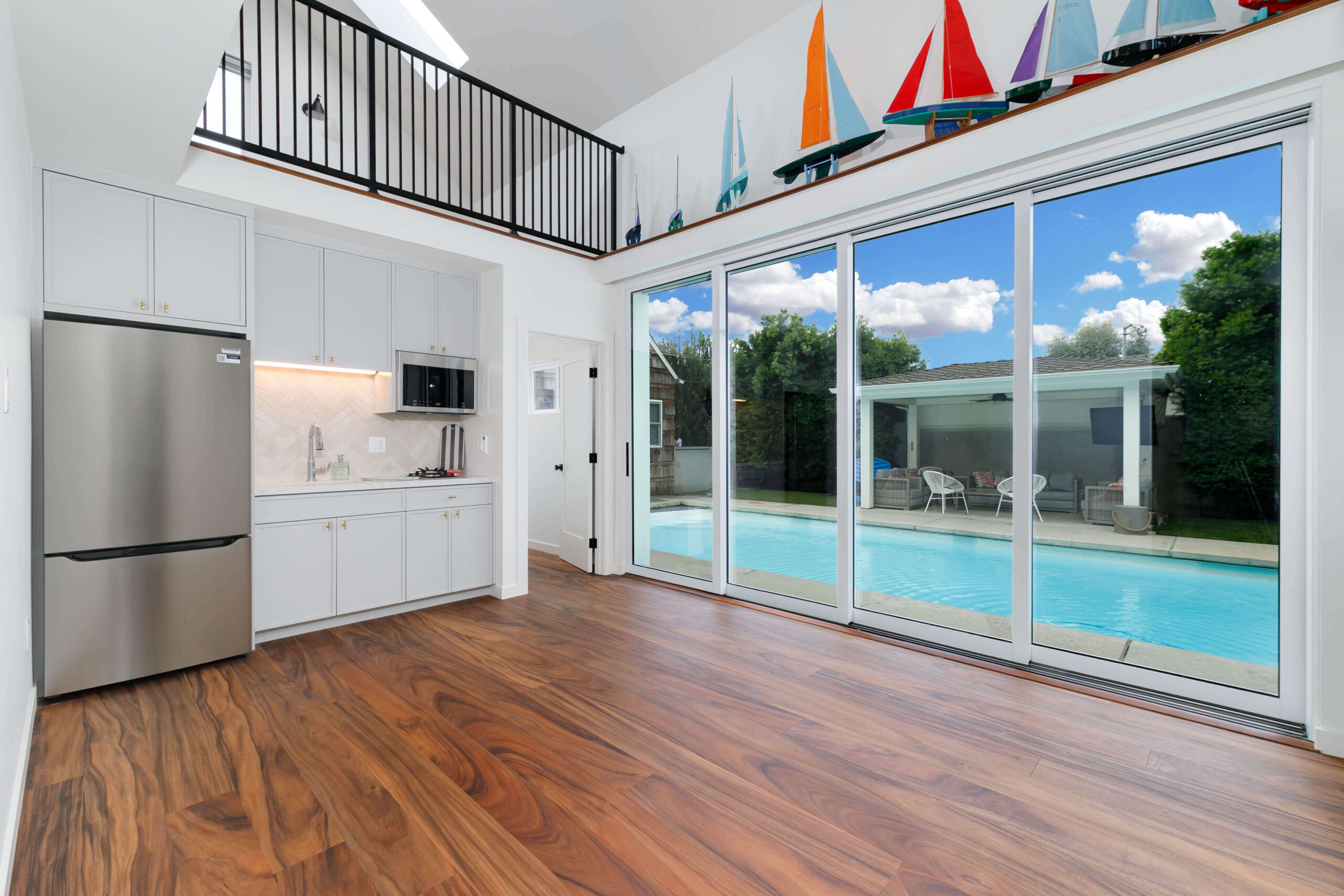
The proposed detached ADU is conceived as a compact two-level dwelling that visually and physically integrates with the main house through a shared roof structure and matching cedar-shake siding. Rather than reading as a secondary outbuilding, the ADU forms part of a cohesive architectural composition.
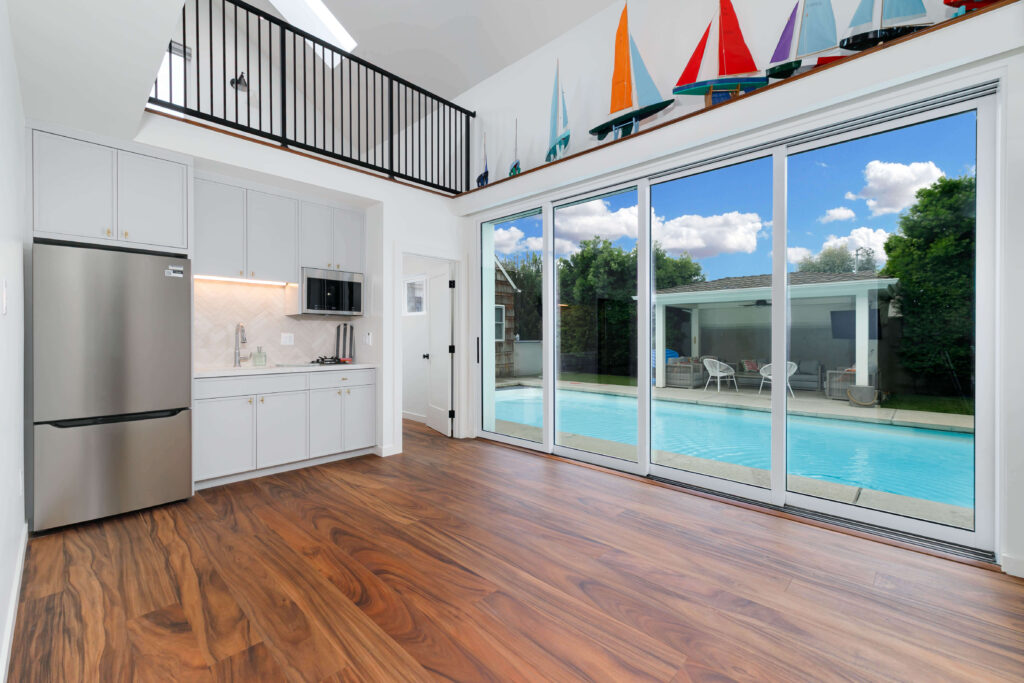
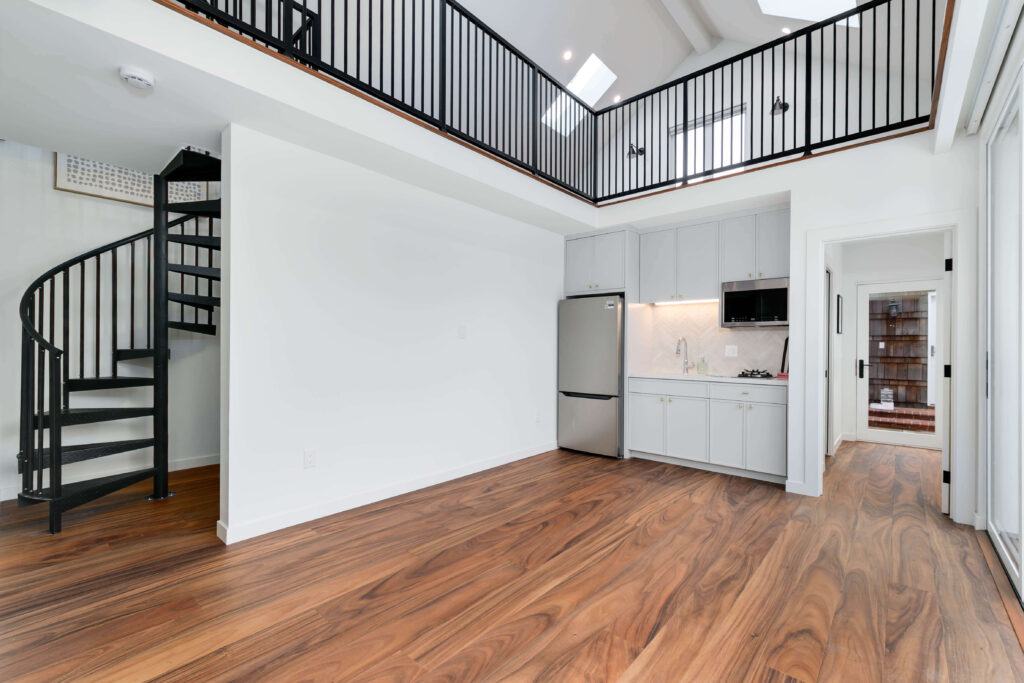
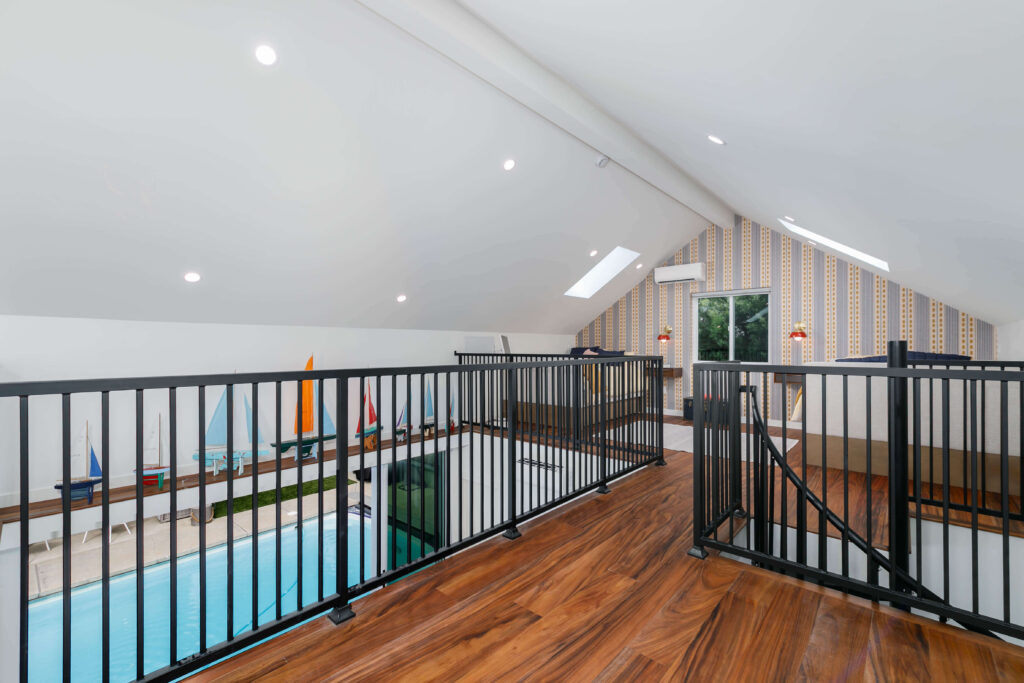
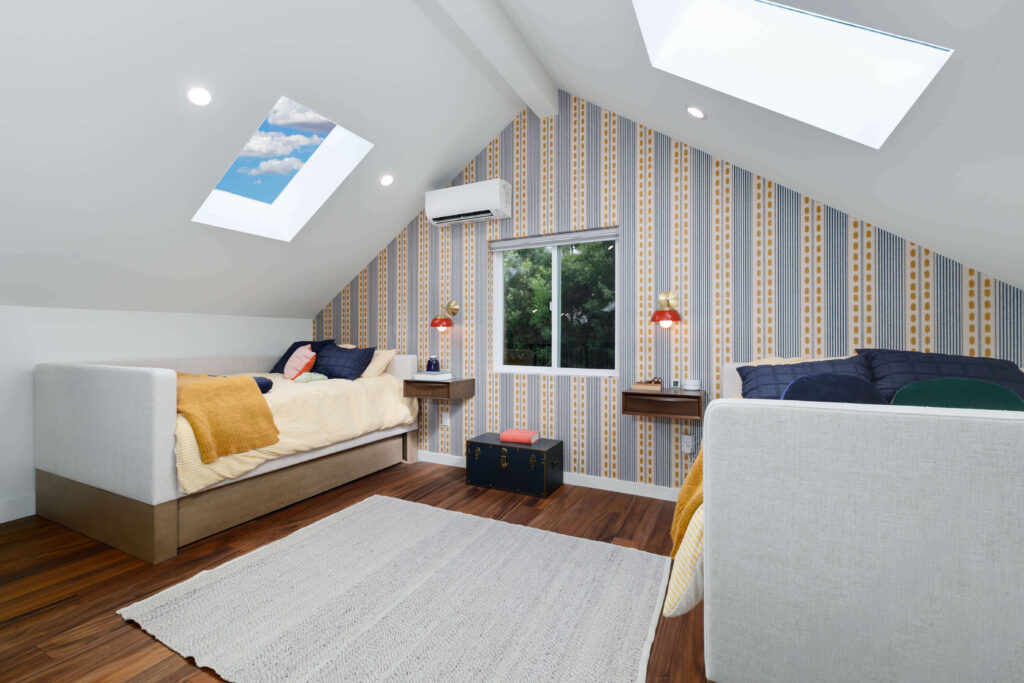
The ADU entrance, located adjacent to the main residence laundry area, opens into a vaulted living–kitchen space defined by the steep roof pitch. A continuous 6 ft × 20 ft ridge beam supports the structure, allowing the ceiling to remain uninterrupted and preserving the full height of the volume. The main level includes a bedroom with an integrated sauna, while a metal spiral stair provides access to a habitable attic level. The loft level meets habitable height requirements and functions as an open loft sleeping area, visually connected to the living space below through an overlook that enhances spatial continuity and daylight penetration.
Overall, the architectural solution carefully balances preservation and transformation. By maintaining the defining character of the original structure while strategically modifying roof geometry and spatial organization, the design resolves existing functional constraints and introduces light, openness, flexibility, and improved functionality. The project demonstrates how thoughtful massing adjustments and cohesive material continuity can meet the client’s evolving needs while respecting the architectural integrity of the neighborhood context.